
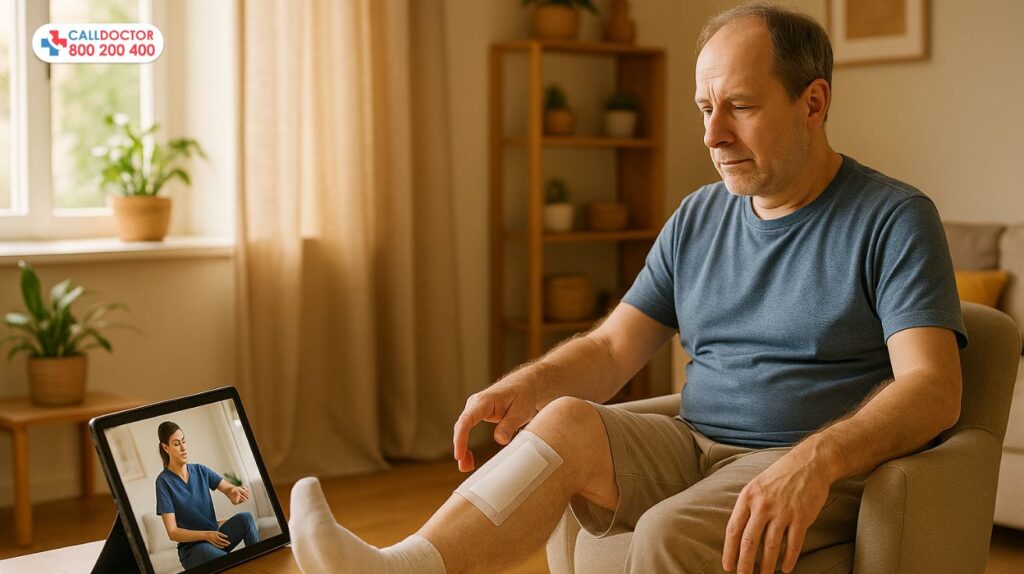
Recovering from surgery can feel like stepping into unfamiliar territory. In those first days after coming home, it’s hard to know whether to push through the discomfort or take more rest. Then there’s that breakthrough moment, the first assisted walk, a deep breath of relief; when progress feels real.
Studies show that structured post-operative physiotherapy can reduce complications and improve functional recovery by up to 40%. With evidence-based guidance from trained physical therapists, recovery becomes faster, safer, and more effective.
Yet here’s the challenge: once discharged, many patients lack clear, reliable direction for continuing their rehabilitation at home. That’s where home-based physiotherapy steps in a combining professional expertise with the comfort and convenience of your own space.
Why Post‑Surgery Physiotherapy Matters
Improved Mobility and Function
Moving your joints and muscles, even gently, prevents stiffness, improves circulation, and supports faster functional recovery. Physiotherapy teaches safe, targeted exercises that restore strength and range of motion while minimizing risk.
Reduced Risk of Complications
Sedentary recovery increases risks of blood clots, infections, and joint contractures. Physiotherapists design movement protocols that promote circulation, breathing, and early mobilization, helping reduce those dangers.
Personalized and Progressive Care
Every surgery, everybody, and every person’s healing timeline is unique. A physiotherapist customizes rehab exercises and adjusts them as you progress, whether you had orthopedic surgery, abdominal surgery, or a joint replacement.
Setting Up a Home-Based Rehabilitation Plan
Initial Assessment
Begin with a virtual or in-person assessment to determine your current status: pain levels, strength, range of motion, and daily functional goals like walking, dressing, or lifting objects. This sets the baseline and clarifies what type of exercises you need.
Goal Setting and Personalized Planning
Good physiotherapy incorporates SMART goals: Specific, Measurable, Achievable, Relevant, Timely. For example: “Walk 50 metres with frame support and no pain within two weeks.” Goal-driven rehab keeps you motivated and on track.
Equipment and Environment
At home, you may need:
- A chair of suitable height
- Resistance bands or light weights
- A non-slip mat or surface
- Assistive devices like walkers or crutches if prescribed
Preparing your space reduces risk and supports smooth exercise execution.

Core Elements of Home Physiotherapy
Safe Warm‑Up and Breathing Exercises
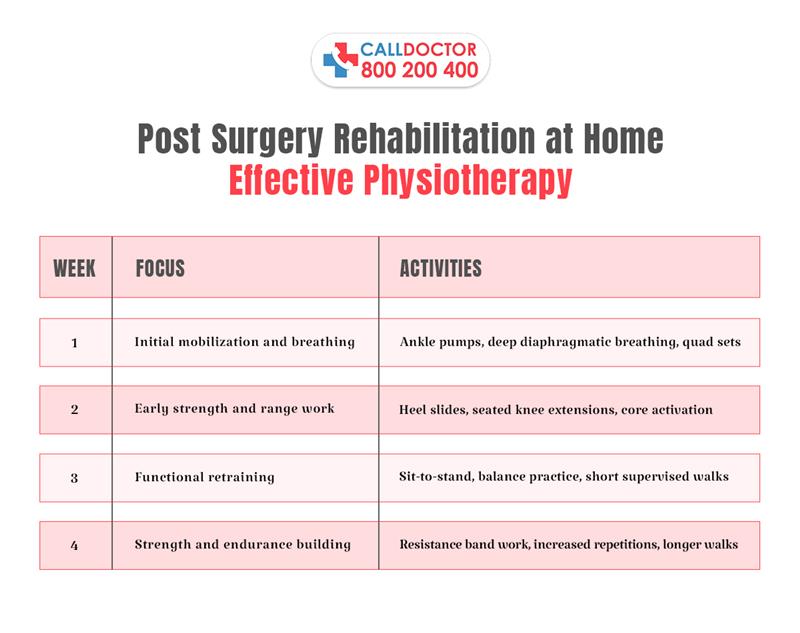
Begin each session with gentle warm-up: ankle pumps, deep breathing, or light arm swings. Breath-work supports oxygenation and helps reduce postoperative complications like pneumonia.
Strength and Range‑of‑Motion Exercises
Depending on your surgery type:
- After joint surgery: gentle knee bends, quad sets, heel slides
- After abdominal or thoracic surgery: core activation, pelvic tilts, gentle trunk twists
- Gradual resistance training in later stages to rebuild strength
Consistency matters more than intensity; even 10–15 minutes twice daily builds momentum.
Functional Training
Reintroduce everyday movements:
- Sit-to-stand practice
- Stair climbing drills
- Transfer techniques (e.g., bed-to-chair, chair-to-commode)
Training functional movement helps rebuild confidence in everyday life.
Progress Monitoring and Adjustment
Track your progress with simple logs: exercise frequency, pain levels on a scale of 0–10, any swelling or unusual discomfort. Share updates with the professional physiotherapist for timely adjustments.
Common Challenges and Solutions
Pain versus Progress: Where’s the Balance?
Some discomfort is part of healing, but sharp or worsening pain signals a problem. Use pain scales, and if levels exceed prescribed limits or swelling worsens, pause and consult your provider.
Motivation and Consistency
Recovery becomes routine, and motivation dips. Keeping a rehab journal, setting small goals, and getting daily virtual check‑ins via Call Doctor helps maintain accountability.
If You Lack Equipment
Simple hacks like using water bottles for light resistance, stairs in your home or curbside, towel slides for range-of-motion, most exercises can adapt. Check with your physiotherapist if unsure.
How Call Doctor Supports Your Home Rehabilitation
Call Doctor brings expert physiotherapy consults right to your home via secure video. Here’s how it helps:
- Personalized Assessment: Licensed physiotherapists evaluate your needs remotely and prescribe safe, targeted exercises.
- Regular Follow-Ups: Scheduled virtual check-ins let you update your therapist, adjust your plan, and progress safely.
- On-Demand Guidance: Quick access to professional feedback if you experience pain, plateau, or need help with technique.
- Holistic Care Coordination: Integration with your medical team ensures rehab aligns with surgical recovery protocols.
With real-time professional guidance and customized support, Call Doctor bridges that gap between hospital and home, making rehabilitation safer, more effective, and less intimidating.
Professional Physiotherapy at home
Rehabilitation at home doesn’t have to be overwhelming. With an evidence-based plan, consistent effort, and expert guidance, most patients regain mobility faster and safer. Physiotherapy is not a luxury, it’s a critical component of recovery that empowers you to return to meaningful life sooner.
If you’re ready to begin your home rehab journey or need effective physiotherapy support; Call Doctor is here to help. We offer personalized plans, consistent follow-up, and expert answers at your fingertips.
Ready to take control of your recovery? Contact us today for your home rehabilitation plan and see the difference professional physiotherapy makes.
Frequently Asked Questions
1. How soon after surgery should I start physiotherapy at home?
Typically within 24–48 hours, depending on your surgeon’s guidance and your stability. Early mobilization improves outcomes and reduces risks.
2. Is it safe to do exercises without equipment?
Yes! Many rehab exercises use body weight or household items. Always confirm with your physiotherapist before starting.
3. What if I experience swelling or increased pain during exercises?
Pause the activity. Use RICE (rest, ice, compression, elevation) if appropriate, and consult your therapist or medical provider for adjustment.
4. How long does home physiotherapy usually last?
Mostly it lasts 4 to 6 weeks, but total duration depends on type of surgery and individual goals. Your therapist adjusts as you progress.
5. Can I combine this with conventional in-clinic physiotherapy?
Absolutely. Home-based rehab can supplement or bridge between clinic visits and serve as a continuation of in-person care.
6. What if I don’t feel motivated to exercise?
Keep a recovery log, set small daily goals, and check in regularly; virtual support from Call Doctor can boost motivation and adherence.
7. Are virtual physiotherapy sessions as effective as in-person?
When delivered by a licensed therapist using video guidance, studies show comparable outcomes for many post-surgery protocols.
8. Do I need prescriptions or referrals?
Usually not, Call Doctor provides physiotherapy consults directly. But follow your surgeon’s plan and share any required documentation to align care.