
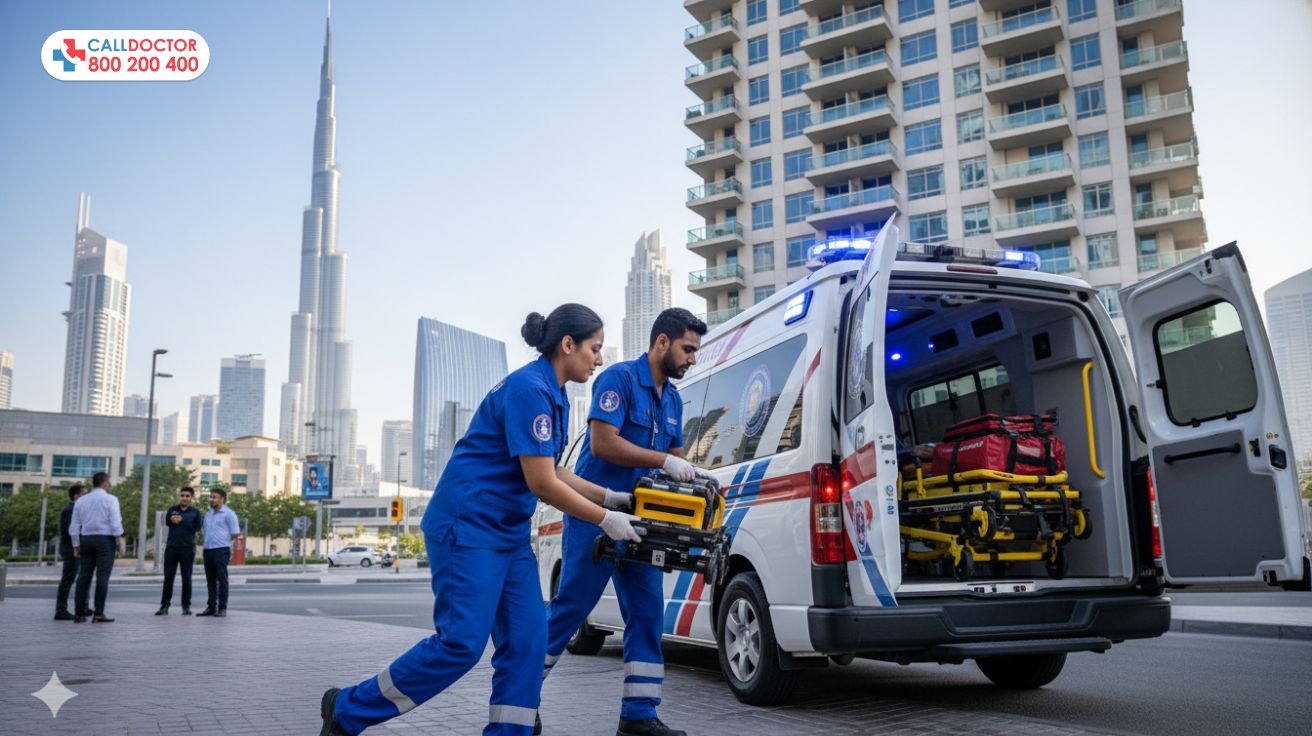
According to Dubai Health Authority data, timely medical intervention prevents complications in over 70% of acute health situations. However, many residents struggle to determine whether their symptoms require emergency services or can be safely managed through urgent care.
This guide helps you understand when to see a doctor urgently, clearly distinguishing between life-threatening emergencies requiring immediate hospital care and stable urgent conditions suitable for home doctor services.
Important Disclaimer: Call Doctor provides urgent medical care for stable patients only. If you experience life-threatening symptoms such as chest pain, stroke signs, severe breathing difficulty, or loss of consciousness, call 998 (Dubai Ambulance) or proceed to the nearest emergency room immediately. Home doctor services are not a substitute for emergency care.
*This information is for educational purposes only and does not replace professional medical assessment or emergency medical advice.
Understanding the Critical Difference: Emergency vs. Urgent Care
Making the right choice between emergency and urgent care protects your health and ensures you receive appropriate treatment.
Emergency Care (Call 998 or Go to ER)
Emergency situations involve potentially life-threatening conditions requiring immediate hospital intervention, specialized equipment, and emergency medical teams. These situations cannot wait and should never be managed outside a hospital setting.
Urgent Care (Home Doctor Appropriate)
Urgent care applies to medical conditions that need professional attention within hours but involve stable patients who are not in immediate danger. These situations benefit from prompt medical assessment but don’t require emergency room resources.

Medical Emergencies: Call 998 Immediately
The following symptoms are medical emergencies. Do not wait for a home doctor call 998 or go directly to the emergency room.
Chest Pain with Warning Signs
Chest pain accompanied by any of these symptoms requires emergency care:
- Pain radiating to arm, jaw, neck, or back
- Profuse sweating
- Shortness of breath
- Nausea or vomiting
- Feeling of impending doom
Action: Call 998 immediately. Do not drive yourself. Chew an aspirin only if previously advised by a doctor and not allergic, while waiting for emergency services
Stroke Symptoms (FAST)
Every minute matters during a stroke. Recognize the signs:
- Face drooping on one side
- Arm weakness or inability to raise both arms
- Speech slurred or confused
- Time to call 998 immediately
Action: Call 998 without delay. Note the time symptoms began this information is critical for treatment decisions.
- Severe Breathing Difficulty
- Seek emergency care when experiencing:
- Gasping for air or inability to speak in full sentences
- Bluish discoloration of lips, face, or fingernails
- Breathing that doesn’t improve with rest
- Severe wheezing with chest tightness
Action: Call 998. Sit upright and try to remain calm while waiting for emergency services.
Severe Allergic Reactions (Anaphylaxis)
Anaphylaxis is life-threatening and presents with:
- Swelling of throat, tongue, or lips
- Difficulty breathing or swallowing
- Widespread hives with dizziness
- Rapid or weak pulse
- Loss of consciousness
Action: Use an EpiPen if available and call 998 immediately. Even if symptoms improve after epinephrine, emergency evaluation is still required.
Head Injuries with Red Flags
Following any head trauma, go to the ER if you notice:
- Loss of consciousness, even briefly
- Confusion or memory loss
- Repeated vomiting
- Seizures
- Clear fluid from nose or ears
- Unequal pupil size
- Worsening headache
Action: Call 998 or have someone drive you to the ER. Avoid sleeping until medically evaluated, unless advised otherwise by emergency services.
Sudden Severe Headache
A headache described as “the worst headache of your life,” especially with sudden onset, may indicate:
- Brain aneurysm or bleeding
- Meningitis (with fever and neck stiffness)
- Stroke
Action: Call 998 immediately. This type of headache is distinctly different from typical migraines and requires emergency imaging.
Sudden Vision Changes
Seek emergency care for:
- Sudden vision loss in one or both eyes
- Seeing flashing lights or floating spots suddenly
- Sudden double vision
- Curtain-like shadow over vision
Action: Go to the ER immediately. Conditions like retinal detachment require urgent intervention to prevent permanent vision loss.
Urgent Care: When Home Doctor Services Are Appropriate
For the following stable conditions, Call Doctor’s home visit services provide safe, professional medical care in the comfort of your home.
Persistent Fever Without Red Flags
A home doctor visit is appropriate when:
- Fever persists beyond 48-72 hours but patient is alert and responsive
- No neck stiffness, severe headache, or confusion
- Patient can maintain hydration
- No rash that fails to fade under pressure
Our doctor-on-call services can assess fever causes, provide treatment, and prescribe medications on-site.
Mild to Moderate Gastrointestinal Symptoms
Home medical care suits patients experiencing:
- Vomiting or diarrhea without blood
- Mild to moderate abdominal discomfort
- Nausea affecting food intake
- Symptoms lasting 24-48 hours without severe dehydration
Note: Severe abdominal pain, bloody stool, or inability to keep any fluids down requires ER evaluation.
Dehydration Without Severe Symptoms
A home visit doctor can help with dehydration when the patient:
- Remains conscious and alert
- Has no confusion or extreme lethargy
- Shows no signs of shock (rapid heartbeat, cold extremities)
- Can communicate symptoms clearly
IV hydration therapy at home effectively treats moderate dehydration. Severe dehydration with confusion or shock requires emergency care.
Minor Injuries and Wound Care
Home doctor services are suitable for:
- Cuts requiring assessment but not deep suturing
- Minor burns without blistering over large areas
- Sprains and strains needing evaluation
- Wound infections requiring antibiotics
- Suture or staple removal
Post-Discharge and Follow-Up Care
After hospital discharge, home visits provide convenient:
- Medication reviews and adjustments
- Wound checks and dressing changes
- Recovery monitoring
- IV antibiotic administration
- Post-surgical assessments
GP doctor home visits help patients recover comfortably while maintaining medical oversight.
Urgent Care for Children: Special Considerations
Children require careful assessment. A pediatrician home visit is appropriate for:
- Fever in children over 3 months who remain playful and hydrated
- Mild respiratory infections with no breathing difficulty
- Ear pain or suspected ear infections
- Mild gastroenteritis with adequate fluid intake
- Skin rashes without fever or other concerning symptoms
Go to the ER immediately if your child has:
- Difficulty breathing or rapid breathing
- Fever in infants under 3 months
- Inconsolable crying or extreme lethargy
- Rash that doesn’t fade when pressed
- Seizures
- Signs of severe dehydration
Quick Reference: Where Should You Go?
| Symptom | Emergency (998/ER) | Home Doctor |
| Chest pain with sweating/radiation | ✓ | ✗ |
| Stroke symptoms | ✓ | ✗ |
| Severe breathing difficulty | ✓ | ✗ |
| Anaphylaxis | ✓ | ✗ |
| Head injury with confusion | ✓ | ✗ |
| Sudden severe headache | ✓ | ✗ |
| Sudden vision changes | ✓ | ✗ |
| Persistent fever (stable patient) | ✗ | ✓ |
| Mild-moderate GI symptoms | ✗ | ✓ |
| Moderate dehydration (alert) | ✗ | ✓ |
| Minor injuries | ✗ | ✓ |
| Post-discharge follow-up | ✗ | ✓ |
What to Do While Awaiting Medical Help
For Emergencies (Waiting for 998):
- Stay calm and remain with the patient
- Do not give food or water
- Note the time symptoms started
- Gather medication list if possible
- Clear access for paramedics
For Home Doctor Visits:
- Note symptom timeline and changes
- Prepare list of current medications
- Have insurance and ID ready
- Write down questions for the doctor
Conclusion
Understanding when to see a doctor urgently and recognizing the difference between emergencies and urgent care empowers you to make safe healthcare decisions. Life-threatening symptoms always require emergency services, while stable urgent conditions can be safely managed through professional home doctor visits.
When in doubt about symptom severity, err on the side of caution and call 998. For stable urgent medical needs, Call Doctor provides licensed physicians who deliver quality care at your doorstep throughout Dubai.
Do you need urgent medical care for a stable condition? Contact Call Doctor for 24/7 home physician services. Our doctors arrive equipped to diagnose, treat, and prescribe bringing the clinic to you.