
Summary
“Is your child’s fever an emergency? This guide gives Dubai parents a clear checklist to help you decide between rushing to the ER and the convenience of calling a doctor to your home.”
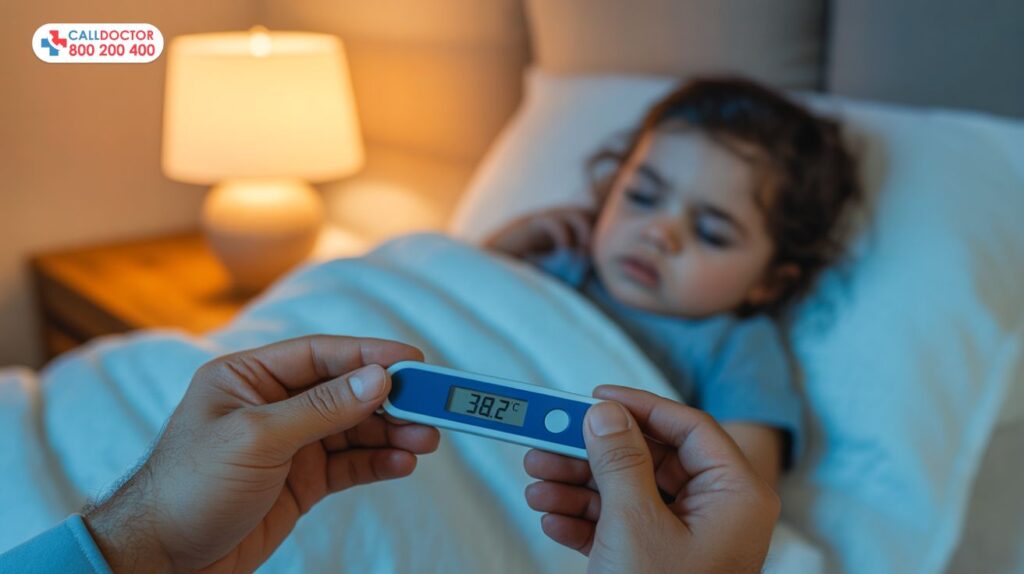
Seeing your child’s face flush and the thermometer climb is every parent’s nightmare. In the heat of the moment, the question “child fever what to do?” races through your mind. You worry about dehydration, hidden infections, and whether this requires a frantic trip to the hospital or if you can manage it safely at home.
This guide cuts through the panic. We provide a clear, step-by-step checklist to help you assess your child’s condition, offer immediate comfort, and make an informed decision: rush to the ER or call a trusted doctor to your home in Dubai.
For general health insights, you can also read our overview of Common Illnesses in Dubai.
First, Understand What Fever Is (And Isn’t)
A fever is not an illness itself; it is a symptom. It signals that your child’s immune system is actively fighting an infection, such as a virus or bacteria. In most cases, a fever is a healthy response and does not require emergency intervention.
Understanding this helps reduce anxiety. Your goal is not just to lower the number on the thermometer, but to keep your child comfortable and monitor for signs of serious illness.
How to Accurately Measure Your Child’s Temperature
Accurate measurement is the first step in deciding what to do about a child’s fever. Use a reliable digital thermometer. Methods vary by age for the best accuracy:
- Infants (0–3 months): Rectal temperature is the gold standard.
- Toddlers & Older Children: Digital oral, ear (tympanic), or underarm (axillary) readings are acceptable. Forehead scanners can be less accurate and should be confirmed with a digital thermometer if the reading is high.
Temperature Reference Chart:
| Category | Celsius (°C) | Fahrenheit (°F) | Action |
| Normal | 36.5°C – 37.5°C | 97.7°F – 99.5°F | Monitor normally. |
| Low-Grade Fever | 37.6°C – 38.2°C | 99.6°F – 100.8°F | Monitor and encourage fluids. |
| Fever | 38.3°C – 39.9°C | 100.9°F – 103.8°F | Comfort care, assess symptoms. |
| High Fever | 40.0°C+ | 104.0°F+ | Contact the doctor immediately. |
Immediate At-Home Care: How to Keep Your Child Comfortable
While you assess the situation, focus on comfort. These steps help your child feel better and prevent complications like dehydration, which is a higher risk in the UAE climate.
- Prioritize Hydration: Fever increases fluid loss. Offer water, diluted juice, or oral rehydration solutions frequently. If your child is breastfeeding, nurse more often. Dehydration can escalate quickly; learn more about maintaining Hydration in the UAE Heat.
- Dress Lightly: Dress your child in light, breathable clothing. Avoid heavy blankets, which can trap heat and raise body temperature. A light sheet is sufficient if they feel chilly.
- Encourage Rest: The body needs energy to fight infection. Create a calm environment and let your child sleep or rest quietly.
- Medication Caution: Fever-reducing medications like paracetamol or ibuprofen can help with discomfort. However, never guess the dosage. Always consult a doctor for the correct dose based on your child’s weight and age, especially for children under two. Medication treats the symptoms, not the cause.
The Critical Decision: ER vs. Doctor at Home
This is the most important section for parents asking about what to do if a child has a fever. Use this checklist to determine the safest course of action.
Red Flags: Go to the Emergency Room Immediately If…
If your child has a fever AND any of the following symptoms, seek emergency care without delay:
- Age Under 3 Months: Any fever (38°C/100.4°F or higher) in a baby this young requires immediate medical evaluation.
- Extreme Temperature: A fever over 40°C (104°F) that does not decrease with medication.
- Breathing Difficulties: Rapid breathing, wheezing, grunting, or the chest pulling in with each breath.
- Altered Consciousness: Your child is unusually drowsy, difficult to wake, confused, or limp.
- Signs of Severe Dehydration: No tears when crying, sunken eyes, dry mouth, or no wet diapers for 8+ hours.
- Rash: A rash that does not fade when you press a clear glass against it (non-blanching rash).
- Stiff Neck or Light Sensitivity: These can be signs of meningitis.
- Seizure: If your child has a febrile seizure (convulsion), place them on their side, do not put anything in their mouth, and call for emergency help.
- Inconsolable Crying: Crying that cannot be soothed and lasts for hours.
When a Doctor at Home is the Ideal Choice
If your child has a fever but none of the red flags above, a home visit is often the smarter, safer, and more convenient option. Choose a Doctor on Call in Dubai when:
- Fever Persists: The fever lasts more than 24 hours (for children under 2) or 72 hours (for older children).
- Discomfort: Your child is irritable, in pain, or unable to sleep despite home care.
- Need Diagnosis: You suspect an underlying issue like an ear infection, strep throat, or flu and need a professional examination.
- Avoiding Exposure: Hospitals and clinics are filled with other sick patients. A home visit keeps your vulnerable child away from additional germs.
- Child Anxiety: Your child is terrified of clinics. Being examined in their safe space reduces stress and makes the assessment easier.
- Convenience: You want to avoid Dubai traffic, parking hassles, and long waiting room times, especially late at night or on weekends.

Why Dubai Parents Choose a Pediatric Home Visit
Call Doctor brings hospital-quality care to your doorstep. Here are why families across the UAE trust our at-home service for fever management:
- DHA-Licensed Experts: Our doctors are fully licensed by the Dubai Health Authority and experienced in pediatric care.
- Comprehensive Assessment: The doctor will check vitals, examine the ears, throat, and chest, and assess hydration levels to find the root cause.
- On-Site Treatment: In many cases, our doctors can administer the first dose of medication or provide immediate relief treatments during the visit.
- Electronic Prescriptions: If medication is needed, you will receive a digital prescription valid at all pharmacies in the UAE.
- Testing Capabilities: If a viral or bacterial infection is suspected, we can arrange diagnostic tests, such as a PCR Test at Home, to confirm the diagnosis without leaving your house.
- 24/7 Availability: Fevers often spike at night. Our service is available around the clock to support you whenever you need help.
What to Expect When Our Doctor Arrives
Knowing the process helps you prepare and reduce stress. Here is how a Call Doctor visit works:
- Quick Booking: Book via our website, app, or WhatsApp. Provide your child’s age, symptoms, and location.
- Prompt Arrival: A DHA-licensed doctor typically arrives at your home within 30 to 60 minutes.
- Gentle Examination: The doctor will interact gently with your child, checking temperature, listening to the lungs, and examining signs of infection.
- Clear Diagnosis & Plan: You will receive a straightforward explanation of the cause and a treatment plan. The doctor will advise medication, hydration, and warning signs to watch for.
- Follow-Up Support: You get clear instructions on when to follow up. If symptoms change, our team is just a call away.
Frequently Asked Questions (FAQ)
Our doctors typically arrive within 30 to 60 minutes of booking, depending on your location. We operate 24/7 to assist you day or night.
Yes. Our team includes general practitioners and pediatricians with extensive experience in treating infants, toddlers, and older children. All are DHA-licensed.
Yes. Our doctors can issue electronic prescriptions that are accepted at all pharmacies across the UAE. In some cases, they may carry essential medications to provide the first dose on-site.
CallDoctor works with several insurance providers. Please check our website or contact our support team to verify if your policy covers home visits or if you can claim reimbursement.
Conclusion
When asking child fever what to do, remember: most fevers are manageable at home with comfort care and monitoring. However, knowing the red flags is essential for your child’s safety. If your child has a fever without emergency symptoms, a doctor at home offers the perfect balance of professional medical care, convenience, and peace of mind.
You don’t have to navigate this alone. Expert help is just a click away.
Is your child’s fever worrying you? Don’t wait and wonder. Book a trusted, DHA licensed doctor to your home now for immediate assessment and care.
👉 Book a Doctor at Home Now or call us at 800 200 400.
Disclaimer: This blog is for informational purposes only and does not constitute medical advice. If your child shows signs of a medical emergency, contact emergency services immediately.