

Summary:
Post-operative nursing care at home provides hospital-grade clinical monitoring, sterile wound dressing, drain management, and physician-supervised medication administration directly in your residence. In Dubai, care must be delivered by DHA-licensed nurses who follow your surgeon’s discharge protocol to prevent infections, manage pain, and eliminate complications like blood clots. Professional home care bridges the vulnerable first 3 to 14 days after discharge, allowing you to recover safely without unnecessary hospital readmissions.
Why Is Professional Post-Operative Nursing Care at Home Essential for Safe Recovery?
Professional post-operative nursing care at home prevents preventable surgical complications, reduces infection risks, and ensures strict adherence to your surgeon’s post-discharge orders. The human body undergoes significant physiological stress during surgery, including tissue trauma, metabolic strain, and immune suppression. The first 72 hours following hospital discharge represent the highest-risk period for surgical site infections, medication administration errors, and poor fluid balance.
Recovering at home eliminates exposure to aggressive, antibiotic-resistant hospital-acquired infections (HAIs). A familiar, quiet residential environment lowers circulating cortisol and adrenaline levels. Lower stress hormone levels improve cellular oxygenation, support tissue regeneration, and accelerate wound healing.
Clinical research demonstrates that structured in-home clinical oversight reduces emergency hospital readmissions by up to 25 percent. A registered nurse monitors subtle physiological changes, such as early-stage wound inflammation, respiratory shallowing, or calf tenderness, addressing these issues before they turn into medical emergencies.
“The immediate post-discharge window is when patients feel most vulnerable. Having a DHA-licensed nurse at the bedside provides clinical continuity, ensuring that surgical discharge protocols are executed with hospital-grade precision in the comfort of your home.” — Clinical Director, Call Doctor
What Does a Post-Surgical Home Nurse Do During Daily Visits?
A post-surgical home nurse manages your complete clinical recovery plan under your operating surgeon’s written instructions. The nurse’s role is medical, focused on sterile treatment, objective monitoring, and progressive physical recovery.
| SURGICAL SITE CARE | CLINICAL PHARMACOLOGY | SYSTEMIC SURVEILLANCE |
| • Aseptic dressings | • IV / IM injections | • Vital signs tracking |
| • Drain output checks | • Anticoagulant shots (LMWH) | • DVT / PE screening |
| • Suture/staple removal | • Prescription reconciliation | • Lung spirometry |
How Do Sterile Wound and Drain Care Prevent Surgical Site Infections?
Home nurses use hospital-grade aseptic techniques to clean incisions, inspect tissue integrity, and replace sterile dressings. Every dressing change uses single-use sterile kits to keep external bacteria away from vulnerable incisions. The nurse evaluates the surgical site for cardinal signs of infection, including expanding redness (erythema), abnormal heat, localized hardness (induration), and purulent drainage.
Drain management requires exact measurement and sterile handling. If your procedure involves Jackson-Pratt (JP) or Hemovac closed-suction drains, your nurse:
- Strips or milks the tubing to prevent fibrin clots from obstructing fluid evacuation.
- Measures and records drainage fluid volume every visit to assess internal healing.
- Monitors drainage fluid characteristics as it shifts from bright red (sanguineous) to pinkish-yellow (serosanguineous) to clear straw (serous).
- Cleans the drain site with antiseptic solutions and empties the collection bulb under negative-pressure suction.
- Performs sterile suture, clip, or staple removal once your surgeon issues written clearance, typically between postoperative days 7 and 14.
How Is Complex Post-Operative Medication Managed Safely?
A post-operative home nurse reconciles your hospital discharge medications with your existing daily prescriptions to prevent dangerous drug interactions, accidental duplicate doses, or missed therapies. Medication discrepancies occur in more than 30 percent of unassisted home discharges. A registered nurse eliminates this risk by building a strict administration schedule.
Skilled nurses handle specialized medication delivery that family members cannot safely perform:
- Subcutaneous Anticoagulants: Administering daily low-molecular-weight heparin (LMWH) injections, such as enoxaparin, directly into the abdomen to prevent lethal blood clot formation.
- Intravenous and Intramuscular Therapies: Administering scheduled IV antibiotics, antiemetics for nausea control, and targeted analgesics through peripheral intravenous lines.
- Multimodal Pain Scoring: Assessing your pain level using standardized clinical scales (0 to 10 Numeric Rating Scale). The nurse balances prescribed medications to keep pain controlled without causing heavy sedation or respiratory suppression.
How Do Home Nurses Accelerate Safe Mobilization and Prevent Blood Clots?
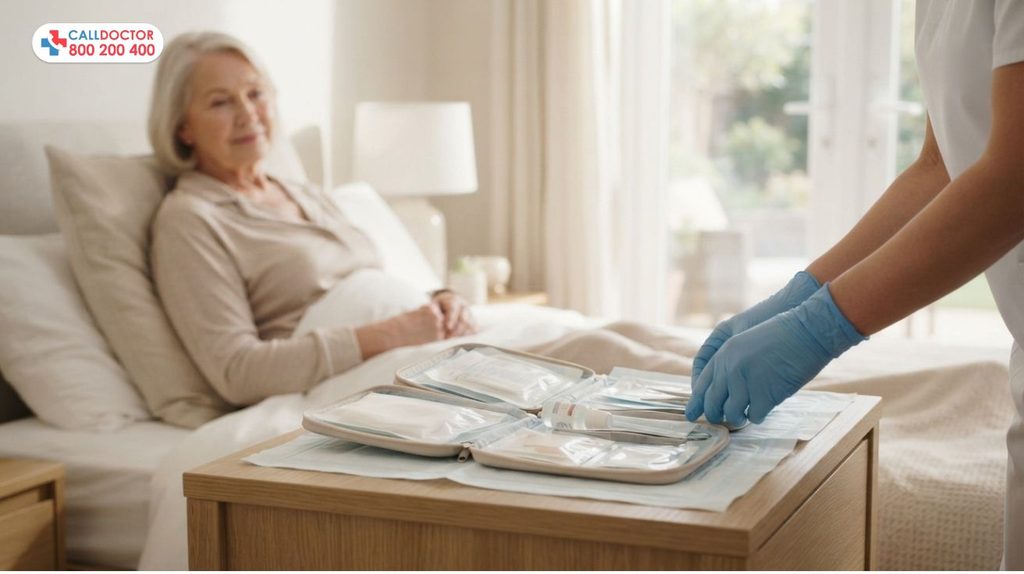
Home nurses guide early ambulation protocols to stimulate venous circulation and prevent Deep Vein Thrombosis (DVT). Prolonged bed rest after surgery causes blood to pool in the deep veins of the lower legs. Nurses assist you through step-by-step physical transitions, moving from gentle leg flexes in bed to sitting upright, standing safely, and walking progressively longer distances.
To protect your respiratory system after general anesthesia, your nurse leads incentive spirometry exercises and deep breathing drills. These exercises re-expand collapsed pulmonary alveoli (preventing atelectasis) and clear lingering anesthetic secretions, keeping post-operative pneumonia from developing. If your surgeon has prescribed home physiotherapy, your nurse shares vital signs and mobility tolerance notes with your physiotherapist, keeping your care coordinated under one unified plan.
When Should You Arrange Post-Operative Nursing Care in Dubai?
You should arrange post-operative home nursing 24 to 48 hours before your planned hospital discharge. Booking ahead gives the clinical coordination team time to review your operative summary, receive specialized orders from your surgeon, and prepare the exact medical consumables required for your first day at home.
The first 48 hours following discharge are the most physically demanding for patients and families. Having a confirmed care schedule in place ensures a nurse meets you upon arrival at your residence, establishes a comfortable recovery room, reviews your discharge medications, and conducts your first baseline vital sign check without delay.
When Does Home Nursing Duration Vary Across Different Surgical Procedures?
Post-operative home nursing duration depends on procedural complexity, incision size, drain placement, and baseline physical health. The following reference table outlines typical nursing durations and daily clinical objectives for major procedures in Dubai:
| Surgical Category | Common Procedures | Typical Home Nursing Duration | Primary Clinical Focus at Home |
| Cosmetic & Plastic Surgery | Abdominoplasty (tummy tuck), mommy makeover, liposuction, facelift | 3 to 7 Days | Jackson-Pratt drain fluid tracking, seroma prevention, skin integrity checks under tight compression garments, sterile dressing changes. |
| Orthopaedic Surgery | Total knee replacement, total hip arthroplasty, spinal fusion | 10 to 21 Days | Subcutaneous DVT blood-thinner injections, surgical staple management, fall-prevention transfers, safe weight-bearing ambulation. |
| General & Laparoscopic Surgery | Cholecystectomy, hernia repair, appendectomy | 3 to 5 Days | Port-site incision inspection, carbon dioxide gas pain relief, oral medication transition, monitoring return of normal bowel function. |
| Maternal & Obstetric Surgery | Cesarean section (C-Section) | 5 to 10 Days | Transverse pelvic incision care, wound healing checks, lactation-safe pain control, fatigue mitigation, mobility assistance. |
| Bariatric Surgery | Gastric sleeve, Roux-en-Y gastric bypass | 5 to 7 Days | Strict hydration logging, electrolyte surveillance, scheduled antiemetic administration, monitoring small trocar wound sites. |
| Cardiovascular Surgery | Coronary artery bypass graft (CABG), valve replacement | 14 to 28 Days | Sternal incision stability checks, leg donor vein graft care, blood pressure and telemetry tracking, pulmonary fluid retention monitoring. |
How Does Dubai’s Climate and Lifestyle Affect Your Surgical Healing at Home?
Dubai’s unique environmental conditions present specific recovery challenges that require targeted nursing interventions. The extreme outdoor summer heat contrasted with chilled, dry indoor air conditioning influences wound hydration, skin integrity, and circulation.
| THERMAL CONDENSATION | INDOOR AIR DRYNESS | EXPAT SOLITARY LIVING |
| Stepping outdoors creates sweat under surgical garments, causing dressing maceration and bacterial proliferation risks. | Constant AC dries mucous membranes and pulls moisture from skin, increasing hydration and blood clot risks. | Over 85% of residents lack local extended family support, making clinical home care a safety necessity. |
- Dressing Maceration Under Compression Garments: Patients recovering from plastic, vascular, or abdominal surgery in Dubai must wear tight medical-grade compression garments. Moving into the outdoor heat causes sweat to accumulate beneath the fabric. This moisture softens and weakens the skin around incisions (maceration), creating a breeding ground for bacteria. A home nurse monitors skin folds, changes damp dressings, and uses barrier films to protect fragile tissue.
- Dehydration and Elevated Clotting Risks: Continuous indoor air conditioning accelerates fluid loss through respiration and dry skin without triggering thirst. Dehydration increases blood viscosity, raising the risk of Deep Vein Thrombosis. Nurses establish strict oral hydration schedules and monitor urine output to keep your blood volume balanced and your kidneys protected.
- Closing the Expatriate Caregiver Gap: Because more than 85 percent of Dubai’s population are expatriates, most households do not have extended family nearby to assist after surgery. A working spouse or partner often cannot take weeks off work to empty surgical drains, administer injections, or lift a patient safely. Professional home nursing provides reliable clinical support, eliminating the risks of recovering alone.
Why Is DHA Licensing Non-Negotiable When Choosing a Home Nurse in Dubai?
Verifying that your nurse holds an active Dubai Health Authority (DHA) license protects you against substandard clinical care, improper medication delivery, and unsafe infection control practices. The DHA enforces strict medical standards across the Emirate of Dubai. A DHA-licensed nurse has completed verified nursing degrees, passed comprehensive clinical examinations, completed background security checks, and maintains valid Basic Life Support (BLS) credentials.
You can verify your home nurse’s professional standing before care begins:
- Request your visiting nurse’s full legal name and professional DHA license number from the home healthcare coordinator.
- Visit the official DHA Sheryan Portal (https://www.dha.gov.ae/sheryan).
- Enter the professional license number in the public register search tool.
- Verify that the license is active, unencumbered, and registered under the “Registered Nurse” (RN) category.
Every nurse dispatched by Call Doctor holds an active DHA license and undergoes specialized clinical training in post-surgical aseptic protocols, emergency triage, and pharmacology.
When Should You Call a Visiting Doctor Versus Heading to the Emergency Room?
Knowing how to differentiate between expected post-surgical discomfort, non-emergency clinical complications, and life-threatening emergencies prevents unnecessary panic while protecting your health. Use this symptom triage matrix to decide on the right action:
| CALL YOUR VISITING NURSE OR DOCTOR | GO TO THE EMERGENCY ROOM (OR CALL 998) |
| Mild redness along incision borders that remains stable over 12 hours. | Incision edges pull apart or reopen with visible tissue (wound dehiscence). |
| Low-grade fever under 38.0°C within the first 48 hours after surgery. | High fever above 38.5°C with severe, shaking chills and confusion. |
| Moderate, throbbing pain controlled by prescribed oral pain medications. | Sudden, sharp calf pain, swelling, warmth, or redness in one leg (DVT). |
| Minor fluid seepage on a dressing that requires a clean replacement. | Sudden shortness of breath, sharp chest pain, or coughing up blood (PE). |
| Mild nausea managed with prescribed oral or intravenous antiemetics. | Bright red blood soaking through your dressing repeatedly within minutes. |
When unexpected symptoms develop, your visiting nurse immediately consults with an on-call physician. The clinical team can adjust medications, order urgent blood panels, or arrange priority hospital transfers when advanced interventions are needed.
How Can Family Caregivers Avoid Burnout During an Extended Recovery?
Family caregivers can avoid burnout by transferring complex medical tasks, such as wound irrigation, medication injections, and nighttime vital sign monitoring, to professional home nurses. Caring for a family member after major surgery is emotionally draining and physically demanding. Family members often balance demanding work schedules, childcare, and household duties alongside around-the-clock patient care.
When family members attempt to manage unfamiliar clinical duties, anxiety increases for both the patient and the caregiver. The fear of causing pain during dressing changes or making a medication dosing error creates constant psychological tension.
Bringing in a registered home nurse restores a healthy family dynamic. The nurse assumes legal and clinical responsibility for wound safety, medication accuracy, and mobility drills. This allows family members to step back into their primary supportive role, providing emotional comfort, preparing meals, and encouraging recovery without the exhaustion of acting as an untrained medical provider.
Frequently Asked Questions
Can a DHA home nurse remove my stitches or staples at home?
Yes. A DHA-licensed home nurse can remove your surgical sutures, clips, or staples in your residence once your operating surgeon provides written clearance. The nurse uses a single-use sterile removal kit, inspects the incision for complete tissue closure, gently removes the fasteners, and applies sterile adhesive strips to support the wound.
Can I request a female nurse for home recovery in Dubai?
Yes. Home healthcare services in Dubai respect cultural, religious, and personal preferences. You can request a female or male DHA-licensed nurse when booking your care. The clinical coordinator will assign a nurse who aligns with your comfort preferences, including language requirements like Arabic, English, or other languages.
How soon can a home nurse arrive after I am discharged from the hospital?
A nurse can arrive at your residence within a few hours of discharge. Coordinating your home care 24 hours prior to leaving the hospital allows your clinical team to review your surgeon’s discharge papers, clarify medication orders, and arrive with the exact sterile supplies needed for your care.
What happens if I experience complications late at night?
Regulated home healthcare providers like Call Doctor operate around the clock. If you experience unexpected pain, dressing leakage, or fever during the night, an on-call doctor or night-duty nurse assesses your symptoms, conducts an urgent home visit, or coordinates direct emergency admission if critical red-flag signs appear.
Is home nursing helpful for minor day-case surgeries?
Yes. Having a skilled nurse visit for 1 to 3 days after outpatient or day-case surgery provides substantial reassurance. The nurse confirms that your anesthesia has cleared safely, inspects small incisions, reviews prescription schedules, and verifies that your vitals and pain levels are stable before you resume daily activities.
Ready for a Safe, Comfortable Recovery at Home?
True surgical success is determined by how well your body heals after leaving the operating room. Professional in-home clinical support protects you from infections, manages your pain, and gives your family complete peace of mind. Contact Call Doctor today to speak with a care coordinator and schedule your DHA-licensed post-operative home nurse anywhere in Dubai.